The Serious Business Of Being Playful
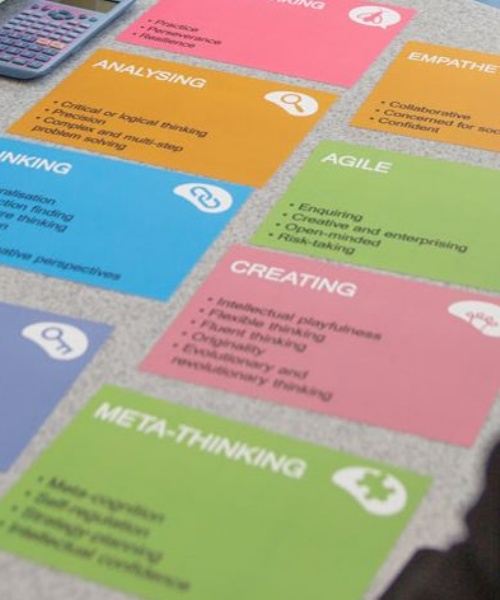
I’m sure that we all have our favourite High Performance Learning characteristic. Mine is one that sounds as if it shouldn’t be allowed in school, but absolutely should be: intellectual playfulness.
Not messing about. Not wasting time. But the kind of playfulness that takes an idea, turns it round, changes its form, and helps us understand it better.
A good example is parody. Parody is the playful imitation of a particular work, style or genre, usually by exaggerating its recognisable features, in order to make us laugh — but also, often, to help us understand the original more clearly.
On the radio show I’m Sorry I Haven’t a Clue, there is a round called “One Song to the Tune of Another”. You take the words of one song and sing them to the tune of another. So imagine “Baby Shark” sung to “Nessun dorma”, or “The Wheels on the Bus” sung to “I Vow to Thee, My Country”, or “Seven Nation Army” by The White Stripes performed as a Renaissance madrigal.
It is funny because our brains recognise both things at once. The joke depends on knowledge. You have to understand both the original and the new style.
That is true of all good parody. A bad parody just mocks. A good parody understands. In fact, the best parodies are usually created by people who know the original material intimately — who have loved it, studied it, absorbed its rules, and only then begun to play with it.
That is why films like Airplane! and The Naked Gun work so well. They are very silly films, but the silliness is precise. Airplane! understands disaster movies: the anxious passengers, the brave crew, the crisis in the cockpit, the dramatic music. The Naked Gun understands police dramas: the car chases, the clues, the solemn hero who has absolutely no idea what is going on.
The same is true of Monty Python and the Holy Grail. It is gloriously ridiculous, but it is not ignorant. It understands Arthurian legend, medieval quests, chivalry, castles, monks, peasants, plague carts and all the strange seriousness of the medieval world. Terry Jones, one of the Pythons, was not just a comedian: he was also a published writer on medieval history and literature. The joke works because the knowledge is there underneath it.
Cervantes had done this centuries earlier in his novel Don Quixote. It begins as a parody of stories about knights, quests, ladies, giants and heroic adventures. Cervantes knew those stories intimately. Don Quixote has read so many of them that he starts to see the real world through them. Windmills become giants. Inns become castles. Ordinary life becomes adventure. It is funny, but it is also serious. Cervantes is asking what stories do to us: how they shape what we see.
In Anna James’s Pages & Co. books – which I learned about the other day from a Year 5 girl whose family were visiting the school - characters “bookwander”, travelling into stories. That is a lovely image for what good thinkers do too: they move between texts, worlds, voices and points of view.
You can do this with visual art as well. One poem I particularly like is U. A. Fanthorpe’s Not My Best Side, in which she takes a Renaissance painting of St George and the Dragon — the sort of image where the roles seem obvious at first glance — and retells it from three points of view: the dragon, the lady, and St George himself.
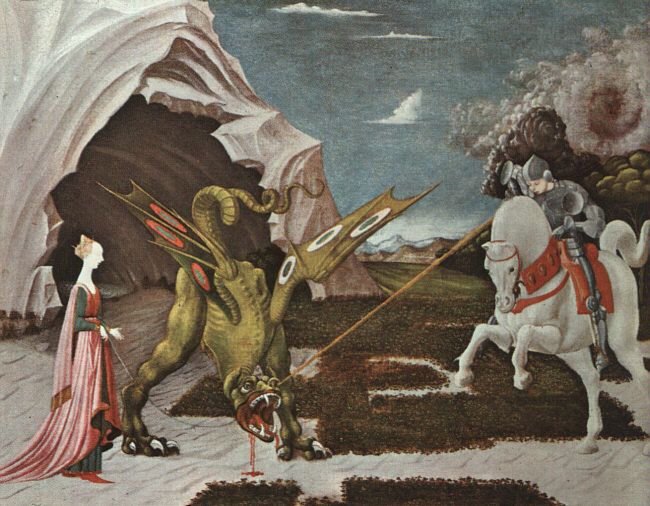
The original picture seems simple enough: brave knight, helpless lady, wicked dragon. But Fanthorpe asks: what if each of them had a voice? What if the dragon was not simply a monster? What if the lady was not quite so helpless? What if St George was not quite so heroic?
That is intellectual playfulness. It asks, “What happens if I look at this differently?”
And this is not only true in the arts. In science, intellectual playfulness is the basis of experiment: what happens if I change this variable? In maths, it means asking whether there is another route to the answer, or what happens if the pattern continues. In economics, it means testing models and incentives: what if people do not behave as the theory expects? In history, it means changing perspective: whose account are we hearing, and what would this event look like from another point of view? In geography, it means asking how places change when we alter the scale or perspective: what does this landscape look like to a resident, a planner, a river, or the climate? In languages, creating your own language, with its own coherent grammatical structures, as Tolkien did for The Lord of the Rings. In every subject, the best thinking often begins with the same small question: “What if…?”
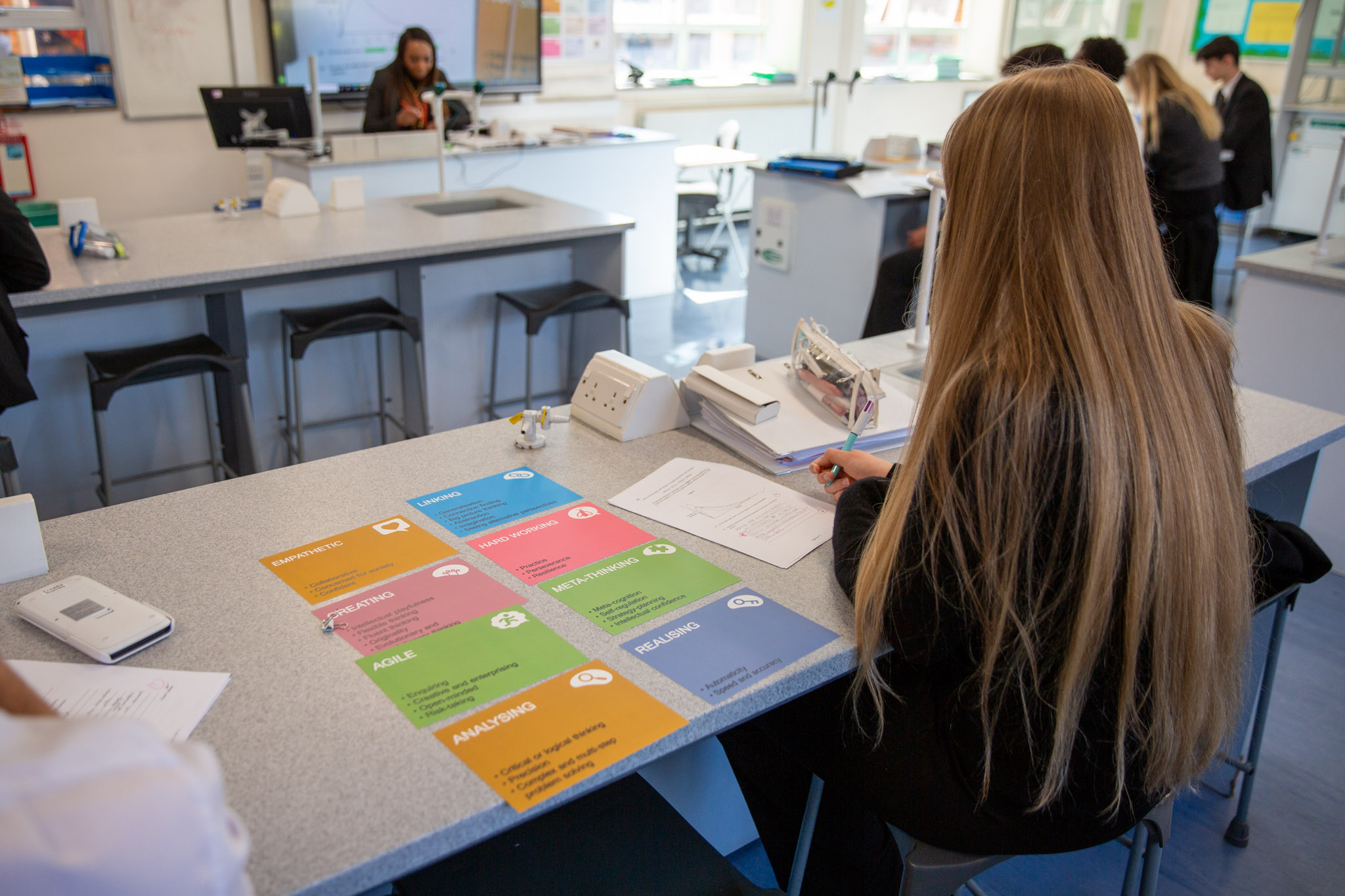
In High Performance Learning, intellectual playfulness is one of the habits of strong learners. It means asking, “What would happen if…?” What if we changed the style? Told the story from another point of view? Explained a scientific process as a court case? Played “Happy Birthday” as if Beethoven had composed it?
This is not just being silly. To play “Happy Birthday” in the style of Beethoven, you have to understand what makes Beethoven sound like Beethoven: the drama, the rhythm, the sudden changes of volume, the seriousness.
You cannot play intelligently with what you do not understand.
And this matters especially now, in a world of artificial intelligence.
AI can produce answers very quickly. It can summarise, imitate and tidy things up. It can even produce something that sounds clever. But that means our task as human beings is not simply to produce standard answers. We need judgement, imagination, humour, creativity, and the ability to ask better questions.
In the AI world, the premium will not be on sounding clever. Machines can do that. The premium will be on thinking playfully, critically and humanly.
As a Catholic school, we believe that human beings are not machines for producing correct answers. We are made in the image of God: imaginative, creative, capable of joy. Playfulness is part of that. It is one of the signs of a mind alive to the world.
So my challenge to you today is this: in one lesson, try to be intellectually playful. Do not just ask, “What is the right answer?” Ask, “What else could I do with this?” Could I look at it from another point of view? Could I change the form? Could I connect it to something apparently unrelated?
Intellectual playfulness is not the opposite of seriousness. Very often, it is the route into seriousness.
The best learners do not simply absorb knowledge. They turn it round, test it, transform it, and make it their own.