A Stitch In Time
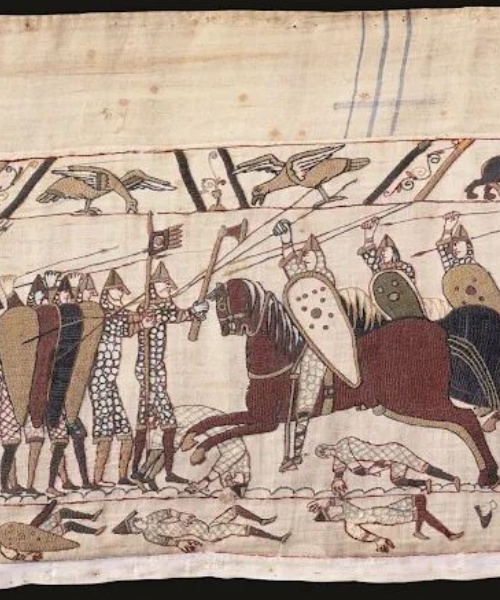
The Bayeux Tapestry is currently on display at the British Museum, on loan from France, and last week the King and Queen visited it there with the French President, Emmanuel Macron, and his wife Brigitte. It is an extraordinary loan, because this is the first time the Tapestry has been brought back to this country since it was made nearly a thousand years ago. Indeed, although we naturally associate it with Bayeux and with France, there is good reason to think that it was actually made in England, probably by English embroiderers, not very long after the events it describes.
I am hoping to see it myself before the exhibition ends, because it is one of those objects which most of us know without necessarily ever having seen in person. We know that it tells the story of 1066: Harold, William, the crossing of the Channel and the Battle of Hastings. These were enormous events. The Norman Conquest transformed England: its ruling class, its language, its buildings and its relationship with Europe.
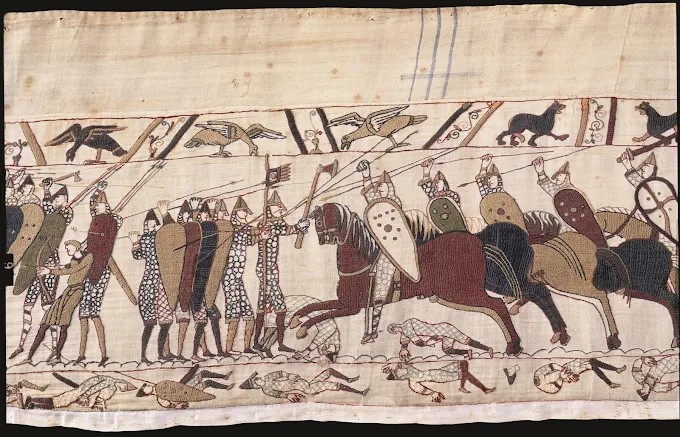
But one of the fascinating things about the Bayeux Tapestry is the way this great sweep of history is actually presented. When you look closely, it is made up of small human actions. People carry messages, swear oaths, cut down trees, build ships, prepare food, saddle horses, give orders and make decisions. What we now call “the Norman Conquest” was experienced at the time as one thing happening after another, one decision followed by another.
And the Tapestry itself works in exactly the same way. Nearly seventy metres of extraordinary craftsmanship and storytelling, made from woollen thread stitched onto linen: one small stitch placed beside another, and then another, thousands upon thousands of times.
That makes me think of a Benedictine phrase which seems particularly appropriate at the beginning of a new academic year: a minimis incipe — begin with the smallest things.
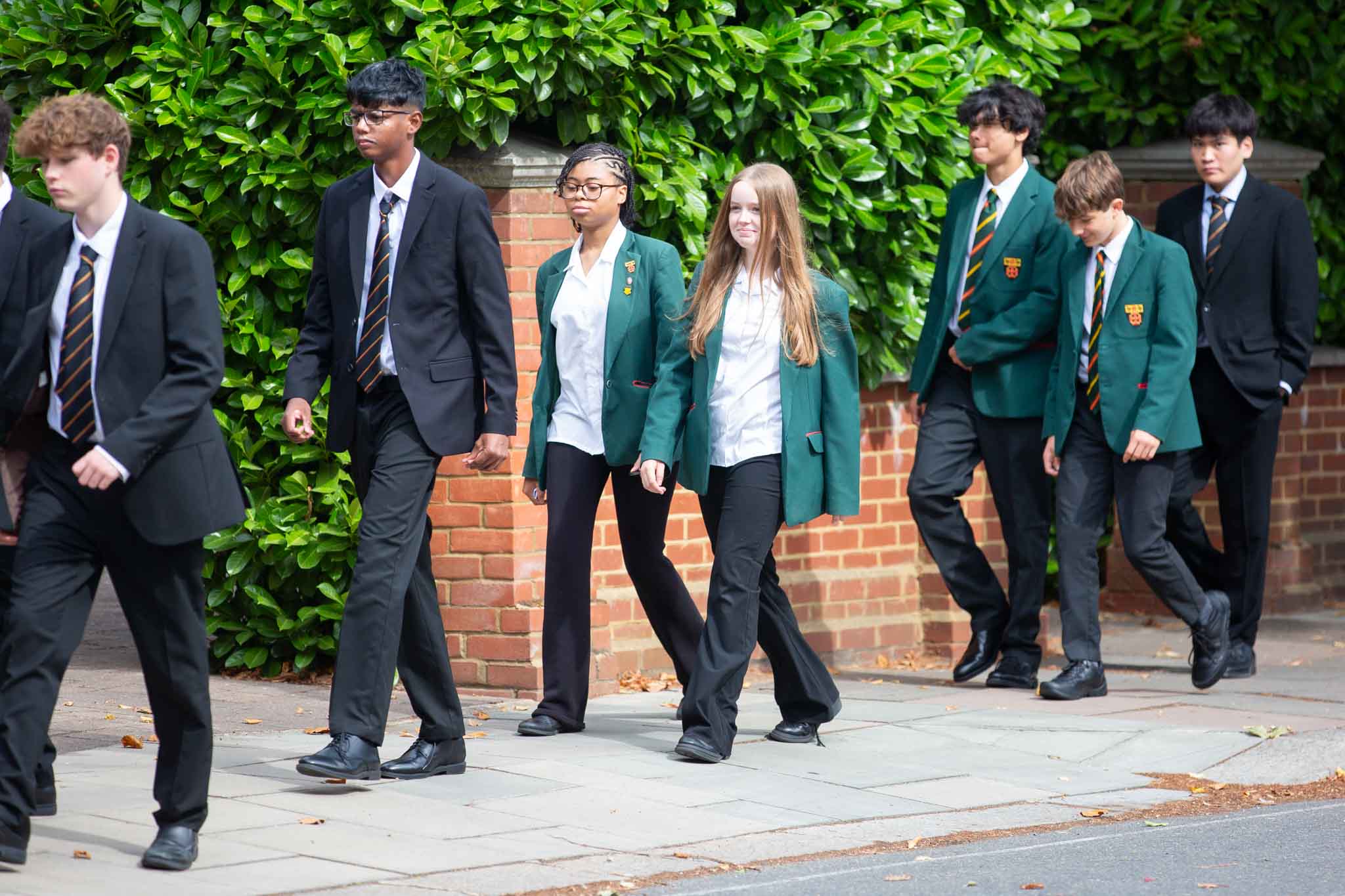
At this point in the year, it is very easy to think in large terms. A new timetable, new teachers, perhaps new subjects, new responsibilities, new teams, new ambitions. For some of you this is your first year in the Senior School; for others, it is the beginning of GCSEs or A levels; and for our oldest students it is the start of a year in which there will be important choices about what comes next.
There is something exciting about a fresh start, but there is also a temptation to imagine that a successful year depends on some dramatic transformation. We tell ourselves that this will be the year when we become completely organised, work much harder, read more, practise every day, or somehow become a different person.
In reality, a good year is much more likely to be built from small things done consistently well: arriving on time, listening properly, completing work carefully, asking for help when you need it, practising when nobody is checking, noticing someone who is on their own, apologising when you should, and treating other people with kindness and respect.
None of those things is particularly dramatic, but repeated often enough they become habits, and habits gradually form our character. A successful year is not really one great achievement; it is the accumulation of hundreds of ordinary days in which we make good choices.
That is why a minimis incipe is not an encouragement to think small. It is a reminder that the genuinely important things are often built from the accumulation of apparently unimportant ones.
There is also something rather pleasing about the Tapestry being in London now. It records an invasion, a battle and a conquest, and yet, nearly a thousand years later, France has lent it to Britain as an expression of friendship. An object created in the aftermath of conflict has become a symbol of reconciliation.
And perhaps the same principle applies to a school. The sort of community St Benedict’s will be this year will not be determined primarily by grand statements about our values, but by the thousands of small interactions which take place here every day: the way we speak to one another, whether we include or exclude, whether we take care over what has been entrusted to us, and what we do when nobody particularly important is watching.
Any one of those things may seem no more significant than a single stitch in a piece of linen. But enough stitches, placed together over time, make the whole picture.
So, at the beginning of this new academic year: a minimis incipe — begin with the smallest things.
Start with today. Do the ordinary things well, and then do them again tomorrow.
That is how a tapestry is made; and, in the end, it is also how a good year, a character, a community and a life are made.